Ponte delle Guglie is the bridge of the spires, one of Cannaregio’s most recognisable landmarks and the bridge that gives Alle Guglie Boutique Hotel its name. It crosses the Cannaregio Canal close to the route from Venezia Santa Lucia station, yet its story goes back long before the railway arrived.
Why is it called Ponte delle Guglie?
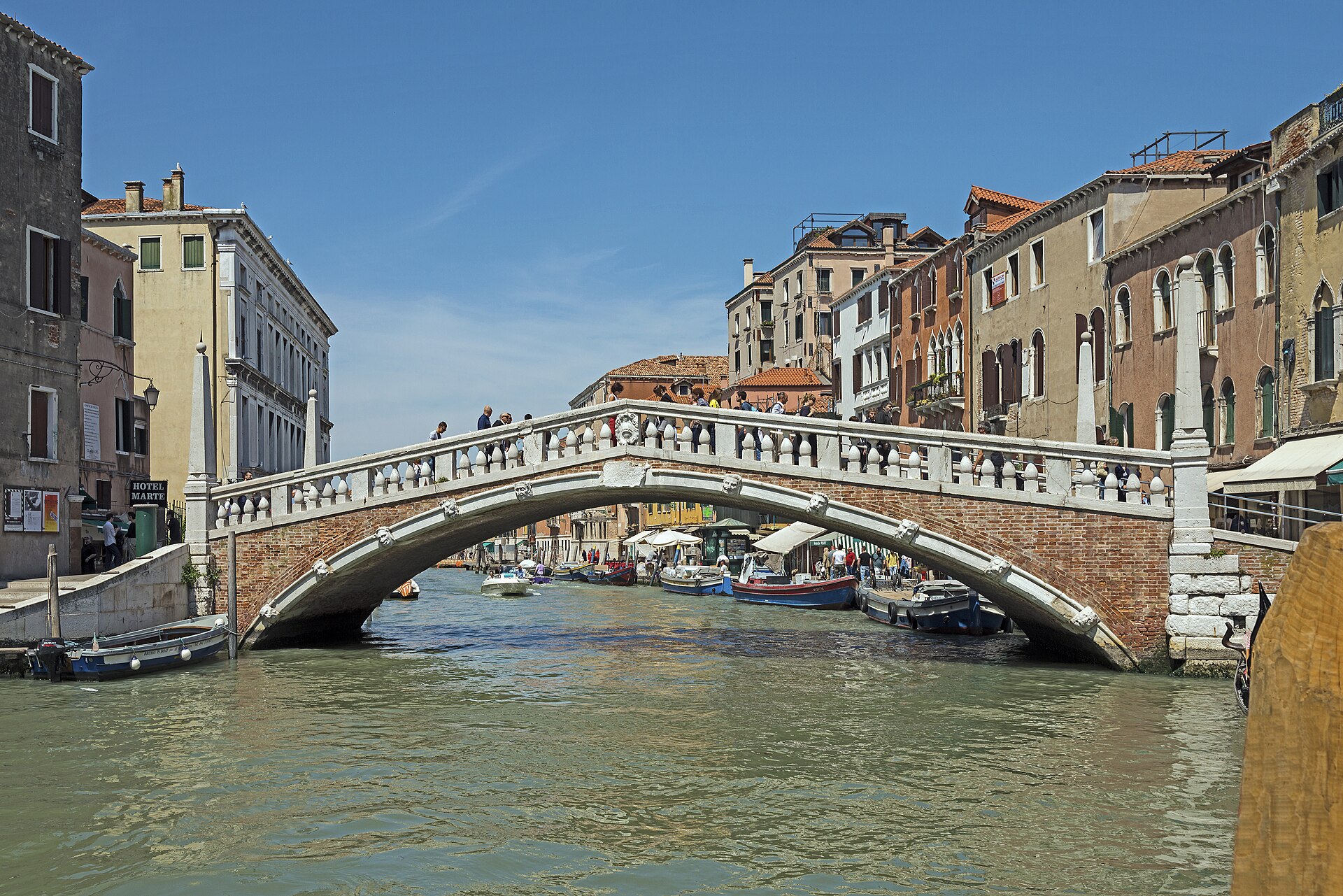
The word guglie means spires or pinnacles. Look carefully at the ends of the stone parapets and you will spot four small obelisk-like ornaments. They are distinctive features of the bridge, and they gave it the name by which Venetians know it today.
There is an interesting detail: the ornamental spires were added in 1823, centuries after the first crossing was established. The name therefore describes a later chapter in a much older structure’s life.
A bridge with medieval roots
Historical studies record a wooden bridge at this location as early as 1285. It was rebuilt in stone in 1580, a period when Venice was investing in more permanent crossings. Renovations and alterations followed across the centuries, reflecting the changing needs of boat traffic and pedestrians.
The bridge links two banks of the Cannaregio Canal, a vital waterway connecting the lagoon-side entrance of Cannaregio with the Grand Canal. Boats still pass beneath its arch while residents and visitors cross above.
What should you look for when crossing?
Pause to notice the contrast between the pale stone balustrades, brickwork and water below. Look along the canal toward the lagoon, and then back toward the lively streets leading into Cannaregio. Depending on the light, the bridge reveals an entirely different personality at sunrise, during a busy afternoon or after dark.
Nearby, Rio Terà San Leonardo offers another lesson in Venetian urban history: the street was once a canal. A few steps in either direction can therefore tell you how Venice evolved from a landscape navigated largely by boat into today’s intricate network of waterways and footpaths.
Why begin a Cannaregio walk here?
For visitors staying near the bridge, it is a natural starting point. From here you can explore the Jewish Ghetto, take an evening stroll along Fondamenta degli Ormesini or simply discover the cafés and shops around Strada Nova. You do not need an elaborate itinerary to appreciate the neighbourhood; curiosity is enough.
Quick questions
Does Ponte delle Guglie cross the Grand Canal?
No. It spans the Cannaregio Canal, in the Cannaregio district.
Are the bridge’s spires medieval?
No. The four ornamental spires were added in the nineteenth century, in 1823.
Historical reference:
IUAV, Atlante dell’accessibilità di Venezia.
Read more about Why Is It Called Rio Terà? The Secret History of Venice's Buried Canals · The Hotel
Image credit: Didier Descouens / Wikimedia Commons — CC BY-SA 4.0. Image resized for the website.